

Buy air movers for water damage restoration and structural drying. Choose from low-profile, centrifugal and axial models from 900 to 4,000 CFM, all stackable with a built-in circuit breaker. Trade pricing available.
Showing all 4 results



Which air mover do you need?
Each type moves air differently. Choose low-profile for everyday drying and tight spaces, centrifugal for carpet and structural drying, and axial for moving large volumes of air.
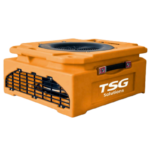
Low-profile air mover for everyday drying and tight spaces.
- 900 CFM
- 0.7 / 0.9 A power draw
- 9.5 kg
- 2 speeds, 3 positions
Quiet, low-profile air mover for occupied homes and offices.
- 1,000 CFM
- 0.6 / 0.8 A power draw
- 10.5 kg
- Low-noise operation
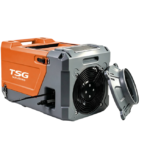
Centrifugal air mover for carpet, underlay and structural drying.
- 1,050 CFM
- 2.3 / 2.7 / 3.2 A power draw
- 14.5 kg
- Carpet clamp included
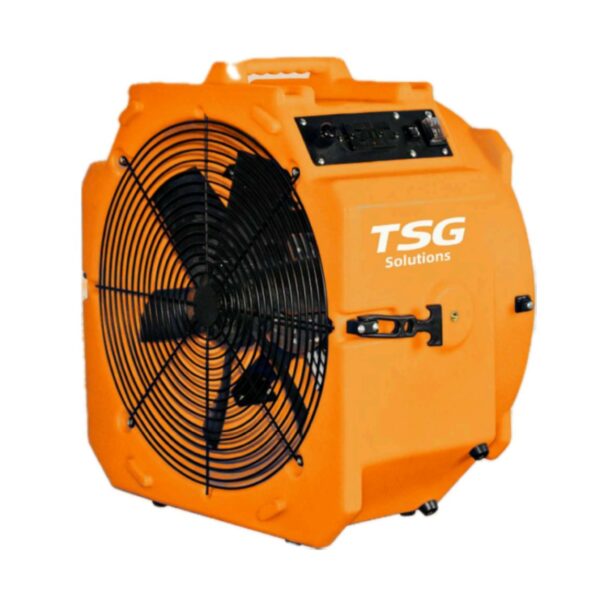
Axial air mover for circulating air across large areas.
- 4,000 CFM
- 0.9 / 1.3 A power draw
- 14 kg
- Sealed motor
All four models are stackable and have a built-in circuit breaker.
Air mover FAQs
A centrifugal air mover like the TS AM15 pushes a focused, high-pressure stream of air. It’s built for structural drying: getting air under carpet and underlay, into wall cavities and across timber floors. An axial air mover like the TS AM20 moves a much larger volume of air at lower pressure, ideal for drying and ventilating large open areas.
A compact unit that sits low to the ground to push air across carpet and floors and into tight spaces. The TS AM10 and TS AM25 are both low-profile, lightweight and stackable, which makes them an everyday choice for residential water damage restoration.
Water damage restoration after leaks, burst pipes and floods, structural drying of walls, floors and subfloors, and carpet and underlay drying. They also support mould remediation by drying out damp materials, and are used for construction drying (paint and plaster), ventilation and cooling on job sites.
That depends on the circuit and what else is plugged into it, but a lower amp draw means more units per circuit. The TS AM25 draws from just 0.6 A and the TS AM10 from 0.7 A, which helps on big drying setups.
The TS AM25. It’s built for low-noise operation, with a refined design for spaces where people are still living or working during the drying job.
Yes, as support. Drying wet materials quickly after water damage helps stop mould from taking hold. During mould removal, run air movers with containment and an air scrubber so airborne spores are captured rather than spread.
Air movers speed up evaporation, and an LGR dehumidifier removes that moisture from the air. Together they’re the core of any water damage or structural drying setup.
Yes. Restoration businesses can register for trade pricing using the link on any product page.