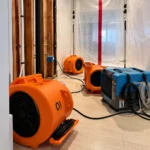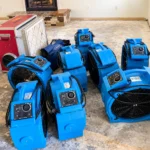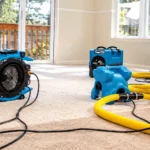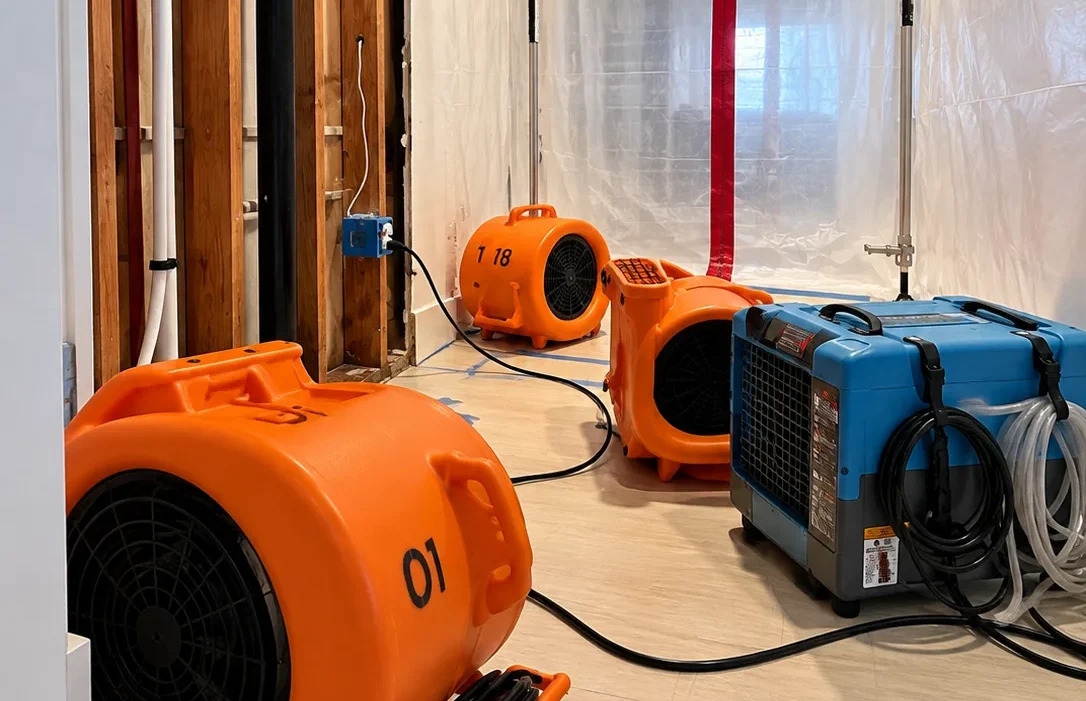
Water damage restoration equipment works as a complete drying system, with each machine performing a specific role. Professional drying relies on equipment working together to increase evaporation, remove moisture from the air and, where required, help manage airborne particles and controlled work areas.
For restoration contractors, choosing the right combination can be challenging. Too little equipment may limit the types of jobs a business can handle, while buying machinery without understanding its role can lead to unnecessary costs.
A professional drying setup typically combines three core functions:
- Moisture removal through dehumidification.
- Air movement to increase evaporation.
- Air filtration and containment support where required.
| Equipment | Primary role | Where it fits |
| LGR dehumidifier | Removes moisture from humid air | Helps maintain a drier environment as wet materials release moisture |
| Air mover | Moves air across wet materials | Encourages moisture to evaporate from affected surfaces |
| Air filtration device | Filters airborne particles | Supports air quality and controlled work environments where required |
Understanding these roles makes it easier to choose equipment around the restoration work you expect to complete.
How Professional Water Damage Drying Equipment Works Together
When building materials become wet, moisture must move from those materials into the surrounding air before a dehumidifier can remove it. Air movement supports this process by increasing evaporation from affected surfaces.
The drying cycle can be summarised as:
Wet materials release moisture → air movement increases evaporation → dehumidifiers remove moisture from the air → drier air supports continued drying.
WorkSafe Queensland recommends cleaning up wet areas and water damage promptly, within 24–48 hours, and identifies dehumidifiers and fans as equipment that can help speed up drying. This highlights the importance of having suitable drying equipment available when responding to water damaged environments.
Each equipment category supports a different part of this process.
An air mover without sufficient moisture removal can circulate humid air. A dehumidifier without effective airflow may not reach affected materials as efficiently. Filtration equipment serves a different purpose, helping manage airborne particles and controlled work environments when the project requires it.
For contractors, the important consideration is not simply the specification of an individual machine, but how the equipment will work with the rest of the drying setup.
Core Equipment for Professional Water Damage Drying
LGR Dehumidifiers Remove Moisture from the Air
LGR, or Low Grain Refrigerant, dehumidifiers are a central part of professional structural drying.
Their role is to extract moisture from humid air and reduce the amount of available moisture within the drying environment. As wet materials release water vapour, the dehumidifier captures that moisture, condenses it and returns drier air to the area.
The appropriate dehumidifier capacity depends on factors such as the affected area, moisture load, environmental conditions and drying objectives.
A smaller residential water loss may call for a compact drying setup, while larger commercial losses may require higher-capacity units operating across multiple drying zones.
TSG Solutions provides a range of LGR dehumidifiers for restoration environments, giving contractors options for different project requirements.
Air Movers Increase Evaporation Through Controlled Airflow
Air movers increase evaporation by moving air across wet surfaces and materials.
Moisture can remain within carpet, timber, plasterboard, flooring systems and other building materials after water damage. Air movers help disrupt the humid air close to these surfaces, allowing moisture to move into the surrounding air.
The objective is not simply to create as much airflow as possible. Effective drying requires controlled placement based on the affected materials, environment and dehumidification equipment being used.
Different air mover designs can suit different environments. Compact units may be useful where space is restricted, while higher-output equipment may suit larger drying areas.
The key is to match airflow to the drying requirements rather than treating air movement as a separate process.
Air Filtration Devices Support Controlled Work Environments
Some restoration projects also require additional control of airborne particles, dust, mould related contaminants or the work environment.
Air filtration devices support these requirements by filtering air through systems designed to capture particles and improve air control within the affected area.
During remediation projects, filtration equipment may be used alongside containment systems to help manage airflow and reduce the movement of airborne particles beyond the work area.
These three equipment categories perform different functions:
- A dehumidifier removes moisture from the air.
- An air mover encourages evaporation from wet materials.
- An air filtration device helps manage airborne particles and controlled conditions.
Understanding the distinction helps contractors choose equipment according to the requirements of each project.
How Restoration Equipment Works Together on Site
A typical drying process begins with technicians assessing the affected area and determining the drying requirements. This includes considering the materials involved, the extent of moisture exposure and environmental conditions.
Air movers can then be positioned to encourage evaporation from wet materials. As moisture enters the air, LGR dehumidifiers remove it and help maintain the drier conditions needed for drying to continue.
Where the project also involves airborne particles or controlled work areas, filtration equipment can support those requirements.
This coordinated approach is why restoration contractors often build equipment fleets rather than relying on individual machines. Different projects can require different combinations and capacities.
Choosing a Restoration Equipment Setup for Different Jobs
Smaller Residential Water Damage Projects
Residential water damage projects often require contractors to balance drying requirements with practical access limitations.
A leaking appliance, bathroom overflow, burst pipe or roof leak may affect a relatively small area, but the property itself can influence which equipment is practical to use.
Contractors working in homes may need equipment that can:
- fit through narrow access points;
- operate effectively in occupied spaces; and
- provide reliable drying performance without unnecessary equipment volume.
Compact LGR dehumidifiers and portable air movers can suit these environments when matched to the drying requirements.
The affected area is only one consideration. Material type, moisture level, temperature, airflow and humidity conditions can also influence the setup.
Larger Commercial and Multi Room Drying Projects
Larger commercial and multi room projects may require equipment to operate across several affected areas or drying zones.
Offices, warehouses, retail spaces and large residential properties can involve greater areas, multiple affected spaces and longer drying periods.
Depending on the project, these environments may require:
- multiple air movers;
- higher capacity dehumidification;
- larger filtration systems; and
- equipment tracking across multiple locations.
The goal is not simply to increase the number of machines. Contractors need a configuration suited to the environment and drying requirements.
Building or Expanding a Restoration Equipment Fleet
For a new restoration business, building a useful equipment fleet does not necessarily mean buying the largest possible range of machines.
Start with the work the business expects to handle.
Before purchasing equipment, consider:
- the types of jobs you expect to complete;
- the environments where the equipment will regularly be used;
- transport and storage requirements;
- future growth plans; and
- whether equipment can support multiple job types.
A residential focused contractor, for example, may place greater importance on portable equipment that can be moved into restricted spaces. A business taking on larger projects may need enough capacity to support several drying zones at once.
The objective is to build useful capability around real project requirements rather than simply accumulating more machines.
Common Water Damage Restoration Equipment Buying Mistakes
Choosing Equipment Based Only on Price
Upfront price is only one consideration when selecting restoration equipment.
Contractors also need to consider reliability, suitability, capacity and how frequently the equipment is likely to be used.
A lower cost option may provide limited value if it does not suit the projects the business expects to complete.
Buying Without Understanding Capacity Requirements
Restoration jobs can involve different moisture loads, affected materials, environmental conditions and drying objectives.
Equipment selection should account for these factors rather than relying on a single specification or assuming the same setup will suit every project.
Understanding what the equipment needs to achieve is more useful than selecting a machine based on one figure alone.
Underestimating Filtration and Containment Requirements
Not every restoration project is limited to drying.
Mould remediation, demolition environments and contaminated areas may require controls beyond dehumidification and air movement.
Where those conditions apply, contractors should consider whether filtration and containment support form part of the equipment requirements.
Buying Equipment Without Considering Real Jobs
Equipment that rarely gets used provides limited operational value.
Consider the projects you complete most often, the environments you work in and the equipment combinations those jobs require before expanding your fleet.
Building the Right Water Damage Restoration Equipment Setup
The right restoration setup depends on the jobs you need to handle, not simply the number or size of machines you own.
Air movers help release moisture from wet materials, LGR dehumidifiers remove that moisture from the air, and filtration equipment supports particle control where the job requires it. The equipment needs to work as a system and suit the affected materials, environment and scale of the project.
For contractors building or expanding a restoration fleet, start with the equipment you will use regularly and add capacity as your project requirements grow.
Explore TSG Solutions’ restoration equipment range or contact the team to discuss equipment for your drying and remediation work.
Questions Restoration Contractors Ask Before Investing in Equipment
Can One Piece of Equipment Handle a Complete Water Damage Restoration Job?
Professional drying generally requires different equipment to perform different functions.
Air movement encourages evaporation, dehumidification removes moisture from the air, and filtration supports separate air management requirements. A single machine therefore rarely performs every role described in this guide.
What Is the Most Important Piece of Equipment for Water Damage Restoration?
There is no single answer because each equipment category performs a different role.
Dehumidifiers, air movers and filtration systems address different requirements, so the appropriate combination depends on the environment, affected materials and drying objectives.
Do Restoration Contractors Need Both Air Movers and Dehumidifiers?
In many professional drying situations, air movers and dehumidifiers are used together because they perform different functions.
Air movers encourage moisture to leave affected materials through evaporation, while dehumidifiers remove that moisture from the surrounding air.
How Do I Know What Size Restoration Equipment I Need?
Equipment selection can depend on the amount of moisture present, affected materials, environmental conditions and the scope of the restoration project.
These factors need to be assessed before determining an appropriate equipment setup.
Should New Restoration Businesses Buy a Complete Equipment Package?
A complete package may suit some businesses, while others may prefer to build their fleet gradually.
The appropriate approach depends on the types of restoration work the business intends to pursue, its operating environment and its equipment requirements.