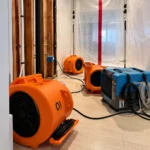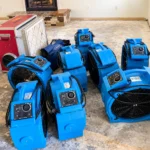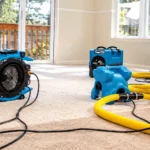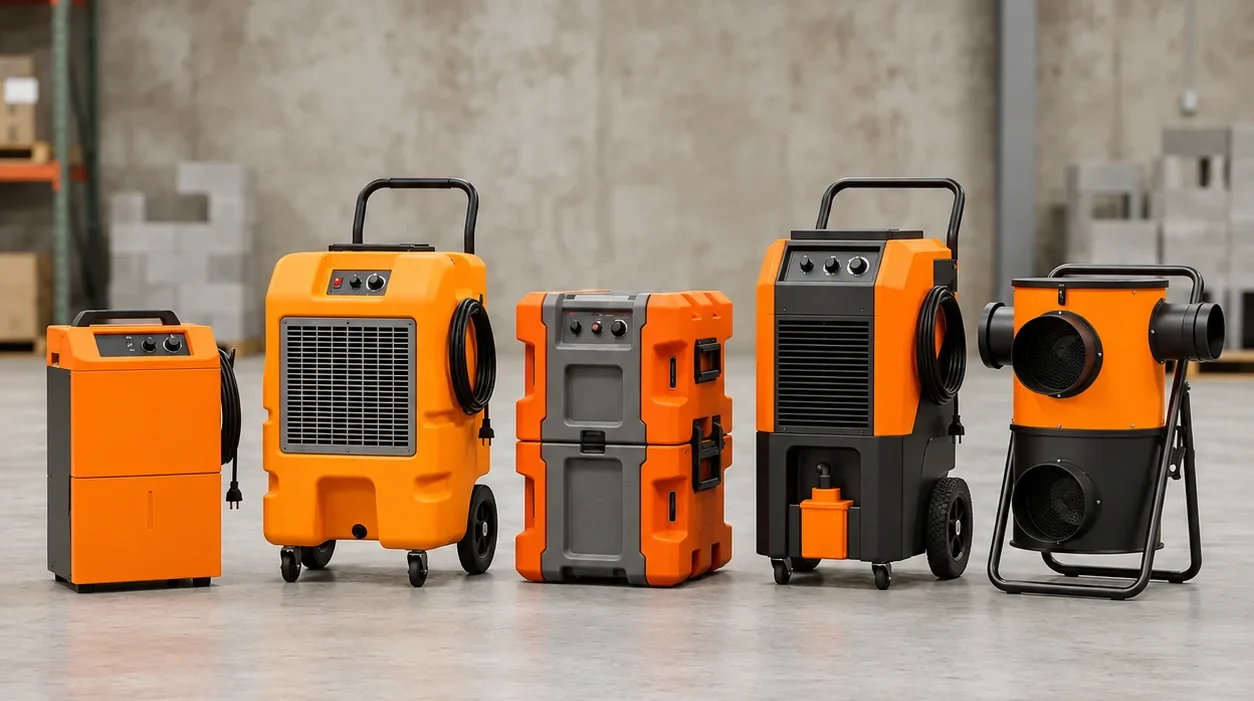
Restoration equipment Melbourne contractors rely on needs to suit the work they actually undertake, from residential properties affected by burst pipes and leaks to commercial buildings requiring larger-scale drying support.
Having individual machines available is only part of the equation. A capable restoration fleet needs equipment that works together throughout the drying process, suits typical project requirements and can be transported and deployed efficiently.
For restoration contractors, builders, equipment hire businesses and facilities teams, fleet planning involves considering:
- The equipment categories required for professional drying
- Typical job sizes and project conditions
- Equipment capacity and portability
- Vehicle and storage requirements
- Equipment availability across active projects
- Future business requirements
The aim is not simply to own more machines. It is to build a practical equipment fleet that can support the range of water damage projects a business expects to handle.
Why Melbourne Restoration Businesses Need Professional Drying Equipment
Professional water damage restoration involves more than removing visible water.
After extraction, moisture can remain inside building materials, air spaces, flooring systems, walls and other affected areas. Drying equipment helps manage this moisture and supports the restoration process.
A professional drying setup typically combines:
- Air movers to increase airflow and evaporation
- LGR dehumidifiers to remove moisture from the air
- Filtration equipment where additional air control is required
- Supporting supplies to maintain equipment operation
Each component performs a different function. Air movers support evaporation, while dehumidifiers remove moisture from the air. Where project conditions require additional air management, filtration equipment can also form part of the setup.
For Melbourne restoration businesses, the important consideration is how these equipment categories work together and whether the available fleet suits the projects the business regularly handles.
Building a Water Damage Restoration Fleet in Melbourne
A restoration equipment Melbourne fleet should be planned around operational requirements rather than built one machine at a time as new needs arise.
Before adding equipment, businesses should consider:
- Typical job sizes
- Number of active crews
- Vehicle capacity
- Storage requirements
- Existing equipment availability
- Future business growth
Different operations can place different demands on the fleet.
| Operation or project type | Key fleet considerations |
| Residential restoration | Portability, access, storage and equipment suited to smaller affected areas |
| Commercial restoration | Greater drying capacity, multiple drying zones and longer deployment periods |
| Equipment hire | Repeated deployment, transport efficiency, equipment range and maintenance planning |
A contractor primarily handling residential drying may therefore need a different equipment mix from a business managing commercial restoration, insurance work or equipment hire.
The objective is to have suitable equipment available for different project conditions rather than relying on the same setup for every job.
Essential Restoration Equipment for Melbourne Water Damage Projects
A professional water damage drying fleet can include dehumidification, airflow and, where project conditions require it, air filtration equipment.
The appropriate combination depends on the project, affected environment and drying requirements.
LGR Dehumidifiers for Structural Drying
LGR dehumidifiers are a core part of professional water restoration equipment because they remove moisture from the air during drying projects.
As wet materials release moisture, humidity levels increase. Dehumidifiers help manage these conditions by extracting moisture from the air and supporting continued drying.
For Melbourne restoration contractors, LGR dehumidifiers may support projects involving:
- Residential water damage
- Commercial property losses
- Structural drying
- Insurance restoration work
Different projects require different levels of drying capacity.
A smaller loss may call for compact equipment that is easier to transport between locations. Larger projects may require higher-capacity units capable of supporting greater moisture loads.
The equipment selected should therefore reflect the requirements of the project rather than assuming one dehumidifier setup will suit every job.
Air Movers for Moisture Transfer
Air movers increase airflow across affected materials, helping move moisture from wet surfaces into the air where dehumidifiers can remove it.
When selecting air movers, restoration teams should consider:
- Portability
- Storage requirements
- Job accessibility
- Equipment compatibility
Residential properties may have narrow access points and limited working areas, while commercial buildings may require broader airflow coverage.
These practical differences affect how equipment can be transported, positioned and used on site.
Air Filtration Equipment for Restoration Applications
Some restoration projects require additional air management beyond drying.
Air filtration equipment can support environments involving:
- Remediation work
- Containment areas
- Dust control requirements
- Controlled restoration zones
Where these conditions are present, filtration equipment can add another capability to the restoration fleet.
Its inclusion should depend on project requirements rather than being treated as necessary for every water damage job.
Choosing Restoration Equipment Based on Melbourne Job Requirements
The right equipment mix depends on the work a restoration business expects to handle.
Residential projects, commercial drying and equipment hire can place different demands on equipment capacity, portability, transport and fleet availability.
Residential Water Damage Restoration
Residential jobs can involve:
- Apartments
- Homes
- Bathrooms
- Kitchens
- Smaller affected areas
Equipment needs to be practical, portable and suitable for moving through occupied properties.
Compact drying equipment can provide flexibility where access, available working space and transport are important considerations.
Commercial Water Restoration Projects
Commercial properties can create different equipment requirements.
Offices, retail spaces, warehouses and facilities may involve:
- Larger affected areas
- Multiple drying zones
- Longer equipment deployment periods
Commercial restoration businesses therefore need to consider whether their available equipment capacity can support these environments while remaining practical to transport and deploy.
Equipment Hire and Fleet Operations
Equipment hire businesses need to consider repeated deployment across different users and restoration scenarios.
Important considerations include:
- Equipment durability
- Transport efficiency
- Range of available equipment
- Replacement and maintenance planning
For hire operations, fleet planning needs to account for different project requirements rather than selecting equipment around one typical restoration job.
Expanding a Restoration Equipment Fleet in Melbourne
Fleet expansion should improve capability rather than simply increase the number of machines owned.
As restoration businesses grow, existing equipment may begin to limit the work they can support. Before purchasing additional machines, businesses should identify where those limitations occur.
Review Current Equipment Usage
Start with the existing fleet.
Which machines are used most frequently? Where do shortages occur? Is equipment regularly committed to active projects when another job requires it?
Reviewing actual equipment use can help identify where additional capacity may be needed.
Consider Job Growth Opportunities
Businesses should also consider whether they plan to take on:
- Larger losses
- More commercial projects
- Additional restoration services
Future work may create different equipment requirements from the projects the business currently handles.
Fleet expansion should therefore consider both current pressure points and the types of projects the business expects to support.
Check the Operational Practicalities
More equipment also means additional transport, storage and maintenance requirements.
Before expanding a fleet, businesses should consider whether they can transport and store additional machines effectively.
Additional equipment should strengthen operational capability rather than create avoidable logistical problems.
Common Mistakes When Buying Restoration Equipment
Purchasing decisions can affect the capability of the entire drying fleet, not just the performance of an individual machine.
Purchasing Equipment Without a Plan
Buying machines individually without considering the wider drying process can create capability gaps.
Air movement, dehumidification and other equipment requirements should be considered together so the fleet can support the overall drying setup.
Choosing Equipment Based Only on Price
Purchase price is one factor, but it should not be the only consideration.
Businesses should also assess:
- Utilisation
- Suitability
- Maintenance
- Operational requirements
Equipment should ultimately be assessed against the work the business expects it to perform.
Ignoring Transport Requirements
Restoration equipment needs to move between locations.
Vehicle capacity, equipment handling and storage should therefore be considered before purchasing additional machines.
WorkSafe Victoria identifies activities including lifting, lowering, pushing, pulling, carrying and moving objects as forms of manual handling. For restoration businesses whose crews regularly load, unload and reposition drying equipment, handling requirements are therefore an important consideration when selecting equipment.
An equipment choice that works in storage but creates problems during transport or deployment may add unnecessary operational complexity.
Failing to Consider Future Demand
Fleet decisions should account for future projects as well as current workloads.
For a growing restoration business, this means considering whether the available equipment can support larger jobs, additional project types or increased demand.
Finding the Right Restoration Equipment Supplier in Melbourne
When researching restoration equipment Melbourne businesses should look beyond individual machine specifications and consider how each equipment choice fits their wider operation.
Useful considerations include:
- How the equipment fits existing restoration workflows
- How different machines work together during drying
- Transport and storage requirements
- The residential or commercial projects the fleet needs to support
- Current fleet limitations
- Future equipment requirements
This approach helps keep purchasing decisions connected to operational needs rather than treating each machine as an isolated investment.
TSG Solutions provides professional restoration equipment designed for water damage restoration, drying and remediation applications.
Melbourne restoration contractors and businesses can explore the available equipment range or contact TSG Solutions to discuss their equipment requirements.
Questions Melbourne Restoration Businesses Ask About Equipment
What restoration equipment is needed for water damage jobs in Melbourne?
Professional water damage restoration typically requires equipment for moisture removal and airflow management and, where necessary, air filtration.
The exact equipment setup depends on the conditions and requirements of the project.
Should Melbourne restoration contractors own their own drying equipment?
Ownership decisions depend on workload, job frequency and business requirements.
Contractors managing regular restoration work may benefit from having equipment available, but the appropriate approach depends on the individual operation and its requirements.
What equipment is most important for structural drying?
Structural drying usually requires a combination of equipment rather than one machine.
Air movers and dehumidifiers work together to support the drying process, with additional equipment used where project conditions require it.
How do restoration businesses choose equipment capacity?
Equipment selection depends on factors including job size, moisture conditions, affected materials and operational requirements.
These factors should be considered alongside the capability of the available equipment when planning a drying setup.
Can restoration equipment support both residential and commercial projects?
Yes, but equipment combinations should reflect the range of projects a business expects to handle.
Residential and commercial environments can place different demands on equipment capacity, portability, transport and deployment.