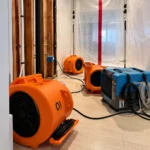
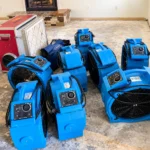
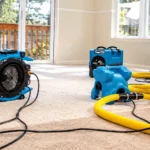
Commercial water damage equipment needs careful planning when restoration projects involve larger areas, multiple drying zones and complex operating conditions.
A leaking pipe in an office building, flooding in a retail space or water intrusion across a warehouse can affect more materials and place greater pressure on restoration teams. Equipment must be transported, positioned and managed across the site while crews work around different drying conditions and, in some cases, ongoing business operations.
The challenge is not simply having more equipment. Commercial restoration requires suitable equipment in the right quantities, deployed according to the conditions and scale of the project.
Commercial water restoration contractors, facilities teams and disaster-recovery operators need to consider:
- Moisture load
- Drying area size
- Equipment capacity
- Transport limitations
- Crew availability
- Project timelines
A well-planned commercial drying setup helps teams allocate equipment effectively and maintain control across larger restoration environments.
Why Commercial Drying Requires Different Equipment Planning
Commercial water damage equipment planning needs to account for scale, access and the conditions within each affected area.
A smaller water loss may involve one room. A commercial project can involve:
- Multiple floors
- Large open areas
- Different building materials
- Several affected zones
- Ongoing business operations
These conditions can require separate drying areas and different equipment arrangements across the same property.
An office area, warehouse and retail space, for example, may present different access, airflow and operating requirements. Treating the entire property as one drying environment can overlook those differences.
Commercial equipment planning therefore needs to consider each affected area as part of the wider restoration project.
Building a Commercial Water Damage Equipment Plan
Commercial water damage equipment planning starts with assessing the project before equipment is deployed.
Moisture conditions are important, but they are only one part of the decision. Teams also need to consider the affected areas, available fleet, transport, crew resources and project requirements.
| Planning consideration | What restoration teams need to assess |
| Moisture load | How much water has affected the building and its materials |
| Drying zones | Whether areas require separate equipment arrangements |
| Equipment capacity | Whether the available fleet can support the project |
| Transport | Whether vehicles can carry the required equipment and supporting supplies |
| Crew availability | Whether equipment can be deployed, moved and managed efficiently |
| Project requirements | Drying conditions, operating constraints and project timelines |
Assessing the Moisture Load
The amount of water introduced into the building influences the equipment required.
A small leak affecting limited materials requires a different response from flooding that saturates flooring, walls, ceilings or structural components.
Understanding the moisture load helps restoration teams assess the level of drying capacity needed for the affected environment rather than approaching every commercial project in the same way.
Identifying Drying Zones
Large commercial projects may contain several areas with different drying conditions.
For example:
- An office area may require controlled drying around furniture and equipment.
- A warehouse may require broader airflow coverage.
- A retail space may require careful equipment placement to reduce disruption.
Separating the project into practical drying zones helps teams allocate equipment according to the conditions in each area.
It also allows equipment planning to reflect differences across the property rather than treating the entire building as a single drying space.
Planning Equipment Availability
Commercial projects can place significant demands on an equipment fleet, particularly when several areas require equipment at the same time.
Businesses should consider:
- Current fleet capacity
- Additional equipment requirements
- Equipment movement between sites
- Crew deployment
Availability also needs to be considered alongside existing workloads. Equipment committed to another project cannot support a new commercial loss at the same time.
Effective fleet planning gives restoration teams greater flexibility when larger projects arise.
Core Commercial Water Damage Equipment for Larger Projects
The commercial water damage equipment required for a larger drying project depends on the conditions and scope of the loss.
Dehumidification and airflow work together during structural drying, while some projects may also require air filtration or controlled work areas.
LGR Dehumidifiers for Commercial Drying
LGR dehumidifiers play a central role in commercial water restoration by removing moisture from the air during structural drying.
As wet materials release moisture, humidity levels increase. Dehumidification removes moisture from the air and supports continued drying.
WorkSafe Queensland advises that wet areas and water damage should be cleaned up promptly, within 24–48 hours, to help prevent mould growth. This highlights the importance of having sufficient drying capacity available when larger commercial water losses affect multiple areas or building materials.
Commercial projects may require greater dehumidification capacity because they can involve:
- Larger affected areas
- Greater moisture loads
- Longer drying periods
- Multiple drying zones
The TS 70 LGR Dehumidifier is designed for applications where greater drying capacity is required, supporting restoration teams working in larger environments.
Capacity alone, however, should not determine equipment selection. The drying area, moisture conditions and wider equipment setup all need to be considered when planning the project.
Air Movers for Large-Scale Drying Environments
Air movers support drying by increasing airflow across affected materials.
This encourages evaporation and helps move moisture into the air where dehumidifiers can remove it.
Air movement requires additional planning in larger commercial environments because:
- Areas may be larger
- Building layouts may restrict airflow
- Multiple zones may require separate equipment arrangements
Placement and coverage therefore matter alongside the number of units available.
Air movement and dehumidification should be planned as parts of the same drying system rather than as separate processes.
Air Filtration and Controlled Work Areas
Some commercial restoration projects have requirements beyond moisture removal.
Facilities may require controlled work areas where airborne particles, dust or contaminants need to be managed. Air filtration equipment can support these environments and containment strategies where required.
This may be relevant during projects involving:
- Remediation work
- Demolition activities
- Contained drying areas
The conditions of the project should determine whether filtration is required. Where relevant, it should form part of the equipment assessment rather than being considered only after challenges arise.
Managing Equipment Transport and Deployment on Commercial Jobs
Selecting suitable commercial water damage equipment is only part of the planning process. Businesses also need to consider how equipment will reach the site, move through the building and remain available throughout the project.
Larger equipment requirements can create logistical challenges that affect how efficiently a restoration team responds.
Vehicle Capacity
A commercial project may require multiple machines, accessories and supporting supplies.
Businesses need to consider whether available vehicles can transport the equipment required for the project and whether additional equipment demands affect deployment.
Equipment Movement
Large commercial buildings may require equipment to be moved between floors, drying zones or different parts of the site.
Ease of handling can affect how efficiently crews deploy and reposition equipment as project requirements change.
Storage and Fleet Organisation
Equipment availability depends on effective fleet organisation as well as the number of machines owned.
Businesses need systems for:
- Tracking equipment locations
- Scheduling deployments
- Managing maintenance
- Preparing equipment for future jobs
A machine that is unavailable, committed elsewhere or awaiting maintenance cannot contribute to the next project.
The equipment itself is therefore only one part of commercial response capability. Transport, organisation and crew deployment determine how effectively the available fleet can be put to work.
Common Challenges in Commercial Water Restoration Projects
Even with suitable equipment available, commercial projects can create practical challenges around capacity, deployment and ongoing operations.
Equipment Shortages During Large Losses
A large commercial loss can use a significant proportion of an equipment fleet.
Restoration businesses need to consider whether their available equipment can support a major project while other jobs remain active.
This makes equipment availability an operational issue as well as a purchasing decision.
Balancing Drying With Business Operations
Commercial restoration work may need to take place while parts of the property remain operational.
Equipment placement, scheduling and drying arrangements therefore need to consider activities continuing inside the building and the need to minimise disruption.
Managing Multiple Drying Zones
Different areas of the same commercial property may require different equipment arrangements.
A warehouse, office area and storage space may present different conditions even when they form part of the same restoration project.
Planning each zone separately helps teams allocate equipment according to the requirements of the affected area while maintaining an overall plan for the project.
Scaling Response Capability
Restoration operators considering larger commercial projects need to assess whether their equipment, transport and crew capacity can support the work they intend to undertake.
This makes fleet planning part of wider commercial restoration capability rather than simply a question of owning more equipment.
Planning Commercial Drying Equipment for Future Demand
A commercial water damage equipment strategy should consider the work a restoration business expects to handle, not simply the number of machines currently available.
Restoration businesses should review:
- The types of commercial losses they want to handle
- Current fleet limitations
- Expected growth
- Equipment utilisation
- Response requirements
Existing commitments also matter. Equipment may already be deployed when another commercial loss occurs, while transport and crew resources can limit how quickly additional machines can reach a site.
The key question is therefore not simply, “Do we own enough equipment?”
It is whether suitable equipment can be made available and deployed when a larger or more complex project arises.
A balanced commercial drying fleet combines suitable dehumidification, airflow equipment and supporting systems according to the conditions of the projects the business handles.
TSG Solutions provides professional restoration equipment designed to support commercial drying, water damage restoration and larger-scale recovery projects.
Explore the restoration equipment range or contact TSG Solutions to discuss equipment requirements for your commercial restoration operations.
Questions Commercial Restoration Teams Ask About Drying Equipment
What equipment is needed for commercial water damage restoration?
Commercial projects typically require equipment for moisture removal and airflow management and, where necessary, air filtration and controlled environments.
The exact equipment mix depends on the size, complexity and conditions of the project.
Are commercial water damage projects different from residential drying jobs?
Yes. Commercial projects can involve larger spaces, multiple drying zones, more complex logistics and greater equipment requirements.
Equipment planning therefore needs to account for the scale and operating conditions of the individual project.
How do I determine how much drying equipment a commercial project needs?
Equipment requirements depend on factors including moisture load, affected materials, building layout, environmental conditions and project scope.
These factors need to be assessed before determining the equipment requirements for a specific project.
Why are LGR dehumidifiers used for commercial drying?
LGR dehumidifiers remove moisture from the air during structural drying. This supports moisture control as wet materials release moisture into the surrounding environment.
How can restoration businesses prepare for larger commercial losses?
Businesses can review their fleet capacity, equipment availability, transport capability, crew deployment and the types of projects they want to support.
Planning these resources in advance can help identify limitations before a larger commercial project requires them.