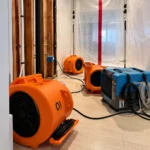
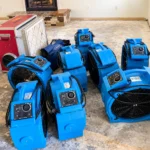
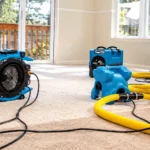
A water damage dehumidifier plays a central role in drying a water damaged building because removing visible water is only the beginning of the restoration process.
After flooding, leaks or significant water damage, moisture can remain inside building materials, air spaces and hidden areas after standing water has been extracted. Walls, flooring, timber, insulation and other materials can continue releasing moisture into the surrounding environment.
A building may look dry while elevated humidity continues to affect the drying process. Professional restoration therefore requires more than removing standing water. It involves managing how moisture moves from affected materials into the air and how that moisture is then removed.
Dehumidifiers perform the moisture removal part of this process. By removing moisture from the air, they help create conditions where affected materials can continue releasing water.
Understanding this role helps restoration technicians, builders and facilities teams make better equipment decisions when managing water damaged environments.
Removing Surface Water Does Not Complete the Drying Process
A water damage dehumidifier becomes important after extraction because moisture can remain within building materials and the surrounding environment.
When materials absorb water, that moisture gradually moves through the material and releases into the air. If humidity remains high, the air becomes less capable of accepting additional moisture, which can slow evaporation.
Professional drying therefore focuses on creating environmental conditions that allow moisture to move from wet materials into the air and then be removed.
The process involves several connected elements:
| Drying component | Role in the process |
| Wet materials | Hold and release retained moisture |
| Air movement | Supports evaporation from affected surfaces |
| Dehumidification | Removes moisture from the air |
| Monitoring | Helps technicians assess conditions and determine whether adjustments are needed |
Temperature also influences drying conditions and needs to be considered as part of the environment.
Dehumidification provides the moisture removal component of the system. Without effective moisture removal, water vapour can remain in the drying environment and reduce the efficiency of the overall process.
How a Water Damage Dehumidifier Supports the Drying Cycle
A water damage dehumidifier removes moisture from humid air while other equipment supports moisture movement from affected materials.
The basic drying cycle follows this process:
- Wet materials release moisture into the surrounding air.
- Air movers increase evaporation by moving air across affected surfaces.
- Dehumidifiers capture moisture from the air.
- Drier air can continue accepting moisture released from wet materials.
This cycle continues as the affected environment dries.
A dehumidifier does not remove water directly from building materials. Instead, it manages moisture in the air so materials can continue releasing retained water.
This distinction matters because a room can contain no visible standing water while moisture remains within materials and the surrounding environment.
Why Humidity Control Matters After Water Damage
A water damage dehumidifier helps control humidity, which influences the conditions in which affected materials dry.
When the air contains high levels of moisture, its capacity to accept additional water vapour is reduced. This can slow evaporation and affect drying progress.
High humidity conditions can create several challenges:
- wet materials may take longer to dry;
- moisture can remain within building structures;
- restoration timelines may increase; and
- additional monitoring may be required.
Reducing humidity helps maintain an environment where moisture can continue moving from affected materials into the air.
Air movement and dehumidification therefore perform complementary roles. Air movers support evaporation from wet materials, while dehumidifiers manage the moisture entering the air.
LGR Dehumidifiers for Professional Water Damage Drying
A water damage dehumidifier using Low Grain Refrigerant (LGR) technology can be used in professional restoration environments where controlled moisture removal is required.
LGR dehumidifiers are designed to remove moisture from the air during structural drying. The supplied information describes LGR technology as being able to continue extracting moisture from air that has already been partially dried, supporting lower humidity drying conditions.
These units are used in restoration situations such as:
- flood damage;
- burst pipes;
- water leaks;
- building material drying; and
- large scale restoration projects.
Equipment selection depends on factors including the size of the affected area, environmental conditions, moisture levels and the materials involved.
TSG Solutions provides LGR dehumidifiers for professional restoration applications, helping contractors select equipment for their drying workflows.
How Dehumidifiers and Air Movers Work Together
A water damage dehumidifier and air movers perform different but connected roles during restoration.
Air movers support moisture release by creating airflow across affected materials. Dehumidifiers manage the moisture entering the surrounding air.
Coordinating these functions helps maintain the drying cycle. Air movement supports evaporation from affected surfaces, while dehumidification removes airborne moisture so the drying environment can continue accepting moisture released from materials.
This is why professional restoration equipment is typically considered as a system rather than as individual machines performing the same task.
The objective is to manage both sides of the process: moisture leaving affected materials and moisture being removed from the air.
Choosing the Right Water Damage Dehumidifier for the Job
A water damage dehumidifier should be selected according to the conditions of the restoration project rather than room size alone.
Different water damage situations can require different levels of drying capacity. Restoration teams should consider the affected area, building materials, environmental conditions and expected equipment operation.
Size of the Affected Area
Larger spaces generally require greater moisture removal capability.
A small residential water loss may require a different setup from a commercial building affected by more extensive water damage.
The affected area should therefore form part of the equipment decision rather than being treated as the only selection factor.
Type of Building Materials
Different building materials hold and release moisture differently.
Timber, plasterboard, flooring systems and concrete can each present different drying challenges. Equipment decisions should account for the materials affected rather than relying solely on the visible extent of the damage.
Environmental Conditions
Temperature and humidity influence drying performance.
Restoration teams need to consider environmental conditions when selecting and managing equipment rather than relying only on what can be seen at the surface.
Duration of Equipment Operation
Some drying projects require equipment to operate continuously over several days.
Equipment selection should therefore account for expected runtime, project requirements and monitoring needs.
The supplied information does not establish a universal operating time or dehumidifier capacity for all water damage situations. These requirements depend on the conditions of the individual project.
Common Mistakes When Drying Water Damaged Buildings
A water damage dehumidifier is one part of a wider drying process, and several mistakes can limit the effectiveness of that process.
Removing Water and Stopping Too Early
Water extraction addresses visible water, but moisture can remain within materials and the surrounding environment.
Drying therefore needs to continue after extraction where project conditions require further moisture control.
Using Airflow Without Moisture Removal
Air movers can increase evaporation, but they do not remove moisture from the air.
Without dehumidification, moisture released from materials remains within the drying environment and can affect further drying progress.
Choosing Equipment Based Only on Room Size
Room size is only one factor when selecting equipment.
Material type, moisture levels, temperature and humidity conditions can also influence project requirements.
Ignoring Ongoing Monitoring
Professional drying requires technicians to check conditions throughout the process.
Monitoring helps determine how drying is progressing and whether equipment or the drying setup needs to be adjusted.
Why Dehumidification Is a Core Part of Professional Restoration
A water damage dehumidifier helps restoration teams manage moisture that remains after visible water has been removed.
Effective structural drying depends on more than extraction. Moisture needs to move from affected materials into the air, and that airborne moisture then needs to be managed.
Air movers support moisture release, while dehumidifiers provide moisture removal. Equipment selection should reflect the affected area, materials, environmental conditions and requirements of the individual project.
Explore TSG Solutions’ range of LGR dehumidifiers or contact the team to discuss equipment options for your restoration requirements.
Questions Restoration Professionals Ask About Water Damage Dehumidifiers
Why Is a Dehumidifier Needed After Water Extraction?
A water damage dehumidifier helps manage moisture that remains after visible water has been extracted.
Building materials can continue releasing retained moisture into the surrounding air. Dehumidification removes airborne moisture so the drying process can continue.
Can Air Movers Dry Water Damage Without a Dehumidifier?
Air movers increase airflow and support evaporation, but they do not remove moisture from the air.
During professional drying, dehumidification provides the moisture removal part of the process.
What Is an LGR Dehumidifier Used For?
LGR dehumidifiers are used in restoration environments to remove moisture from the air during structural drying projects.
The supplied article identifies applications including water damage, flood damage, burst pipes, water leaks and building material drying.
How Long Does a Water Damage Dehumidifier Need to Run?
The required operating time depends on factors including moisture levels, building materials, environmental conditions and the size of the affected area.
The supplied information does not support a fixed drying time that applies to every project.
What Should Restoration Technicians Consider When Selecting a Dehumidifier?
Technicians should consider moisture load, affected materials, environmental conditions, equipment capacity and the requirements of the specific restoration project.
Room size can inform equipment selection, but it should not be the only consideration.