Water restoration equipment packages should be built around the work a restoration business needs to complete, not simply the number of machines it owns. As workloads increase, equipment decisions can affect response times, crew capability and the types of restoration projects a business can confidently take on.
A job ready package requires contractors to consider how equipment works together, how many active jobs a team needs to support and the types of losses the business regularly manages.
The aim is to create a restoration system that supports current workloads while providing room to expand as operational requirements change.
Build a Restoration Equipment Package Around Capability
Water restoration equipment packages work best when each component supports a specific part of the restoration process.
Many restoration businesses begin by purchasing equipment one item at a time. A contractor may buy several air movers, add a dehumidifier later and expand the fleet as larger jobs appear. This can work during the early stages of a business, but it can also leave capability gaps.
A drying project relies on several systems working together:
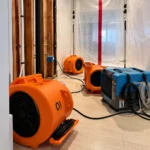
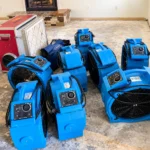
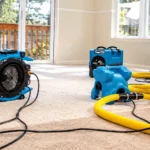
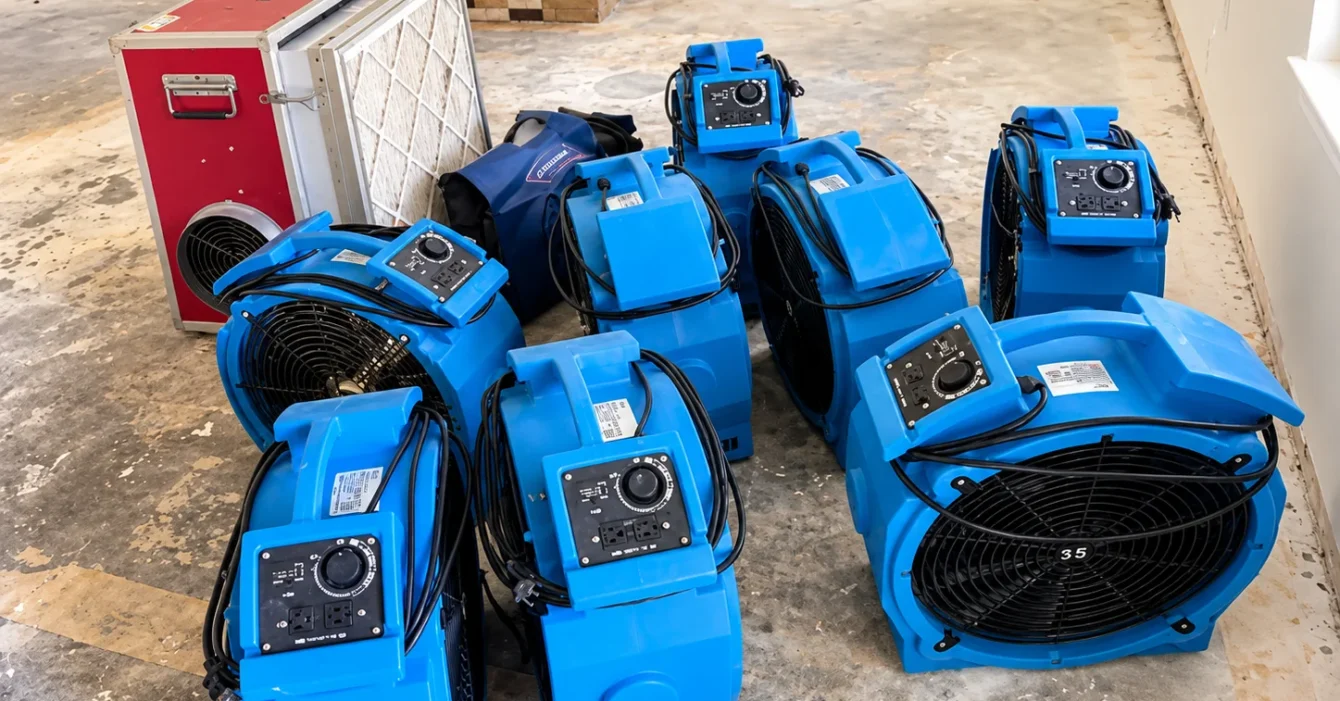
- Air movers increase evaporation by creating controlled airflow.
- LGR dehumidifiers remove moisture from the air.
- Air filtration devices support controlled environments where required.
- Consumables and supporting supplies help maintain equipment performance and job readiness.
The important question is not only how an individual machine performs. Contractors also need to consider whether the overall equipment package supports the jobs their teams accept.
Core Components of Water Restoration Equipment Packages
| Equipment category | Primary role | Fleet planning consideration |
| LGR dehumidifiers | Remove moisture from the air | Capacity should suit different project requirements and moisture loads |
| Air movers | Increase evaporation through controlled airflow | Different designs can support different job environments |
| Air filtration devices | Support air management and controlled environments | Relevant where filtration or containment support is required |
| Consumables and supporting supplies | Help keep equipment operational and job ready | Ongoing supply requirements should be considered when planning a fleet |
LGR Dehumidifiers for Moisture Removal
Water restoration equipment packages commonly include LGR dehumidifiers because they perform the essential task of removing moisture from the air.
During structural drying, wet materials release moisture into the surrounding environment. As humidity increases, drying can slow. Dehumidifiers extract moisture from the air and help create conditions where evaporation can continue.
WorkSafe Queensland advises that porous materials such as plasterboard, insulation and carpet that remain wet for more than 48 hours may need to be discarded if they cannot be adequately cleaned and dried. This reinforces the importance of having sufficient drying capacity available when responding to water damaged environments.
Different jobs can create different moisture loads.
A growing fleet may therefore require different dehumidifier capacities so technicians can match equipment to project conditions rather than relying on the same setup for every job.
Air Movers for Controlled Drying
Water restoration equipment packages also rely on air movers to support evaporation from affected materials.
When materials become saturated, moisture needs to move into the surrounding air before it can be removed. Air movers create airflow across affected surfaces to support this transfer.
Effective drying is not simply about producing as much airflow as possible. Restoration professionals need to consider the affected materials, room layout, drying objectives and how airflow works with the dehumidification equipment on site.
Different designs can suit different restoration scenarios. Compact units may be useful for residential jobs where access and storage are important, while higher output units may suit larger drying environments where greater airflow coverage is required.
TSG Solutions provides a range of air movers for professional restoration applications, allowing businesses to consider equipment according to their operational requirements.
Air Filtration Devices for Controlled Restoration Environments
Water restoration equipment packages may also require filtration equipment when a project involves air quality management, containment support or airborne particles.
Air filtration devices can be relevant for projects involving:
- mould remediation;
- containment areas;
- dust producing restoration work; and
- controlled air environments.
Filtration equipment performs a different function from drying equipment. A dehumidifier manages moisture, an air mover supports evaporation and a filtration device supports air management.
Including suitable filtration capability gives restoration businesses greater flexibility when projects involve these additional requirements.
Water Restoration Supplies and Supporting Equipment
Water restoration equipment packages need supporting supplies as well as major machines.
These may include:
- replacement filters;
- containment supplies;
- accessories required for equipment operation; and
- job specific restoration materials.
Planning for these ongoing requirements helps businesses keep equipment ready for use across active projects. Running out of essential consumables can interrupt workflow, so supporting supplies should form part of fleet planning rather than being treated as an afterthought.
Designing Equipment Packages Around Business Needs
Water restoration equipment packages should reflect the size, workload and operating requirements of the restoration business using them. A starter fleet has different priorities from a multi crew operation or a business handling larger commercial and insurance restoration work.
Starter Fleet for Growing Restoration Contractors
A starter fleet should give a growing restoration business flexibility across its most common jobs without prioritising equipment that does not match current demand.
The initial package may focus on:
- reliable drying equipment;
- versatile air movers;
- suitable dehumidification capacity; and
- essential filtration capability.
Before expanding the fleet, consider:
- the types of jobs completed most often;
- how much equipment an active project may occupy;
- transport and storage requirements;
- access restrictions; and
- which equipment can support multiple restoration scenarios.
The objective is to create useful capacity for current workloads while providing a practical foundation for future growth.
Multi Crew Fleet Requirements
Water restoration equipment packages become more complex when several crews need equipment at the same time.
A single drying project may require multiple machines, and several active jobs can quickly place pressure on fleet availability.
Multi crew operators should consider:
- the number of jobs active at the same time;
- equipment turnaround between projects;
- transport requirements;
- storage capacity; and
- maintenance schedules.
The priority is ensuring each team can access the equipment needed for its assigned work without creating avoidable shortages elsewhere in the operation.
Insurance Restoration and Commercial Response Fleets
Water restoration equipment packages for insurance restoration and commercial work need to account for potentially larger and less predictable workloads.
A significant loss may involve multiple drying zones, larger affected areas and longer equipment deployment periods.
Businesses operating in these environments may need to plan for:
- higher job volumes;
- larger drying requirements;
- multiple simultaneous projects; and
- consistent equipment availability.
Planning around these operational demands can help businesses prepare their fleets for periods when equipment requirements increase.
Common Mistakes When Building Restoration Equipment Packages
Water restoration equipment packages can become inefficient when purchasing decisions are disconnected from actual workloads and operating requirements.
Buying Equipment Without Considering Job Types
Equipment purchases should reflect the work a business performs.
A contractor focused on residential water damage may require a different fleet from a company handling commercial restoration projects. Reviewing typical job scenarios helps businesses prioritise equipment that is likely to be used regularly.
Focusing Only on Individual Specifications
Specifications are useful, but they do not show how an entire fleet will perform.
Restoration equipment works as a system. Contractors need to consider how equipment categories combine, how crews use them and whether the overall package supports project requirements.
An individual specification should therefore form part of the purchasing decision rather than becoming the only deciding factor.
Underestimating Future Growth
Equipment purchases may remain in service as a restoration business grows.
Businesses should consider current workloads alongside future operational requirements. This can help identify where additional capacity or equipment flexibility may be useful as the business takes on different projects.
Future demand cannot always be predicted, so growth planning should support purchasing decisions rather than encourage unnecessary equipment purchases.
Forgetting Operational Practicalities
Water restoration equipment packages also need to work within the practical realities of daily operations.
Businesses should consider:
- equipment storage;
- transport requirements;
- maintenance;
- replacement parts;
- crew training; and
- job scheduling.
A machine may suit the technical requirements of a project but still create operational problems if it cannot be transported, stored, maintained or deployed effectively.
How to Plan a Restoration Equipment Fleet That Supports Growth
Water restoration equipment packages should ultimately be planned around real operating requirements.
Before expanding a fleet, review:
- the types of jobs completed most often;
- the number of crews using equipment;
- the size of typical restoration projects;
- equipment gaps affecting current operations; and
- future service opportunities.
This approach helps businesses identify where additional dehumidification, airflow, filtration or supporting supplies may improve their ability to manage restoration work.
TSG Solutions provides equipment for professional drying, remediation and restoration workflows. Explore the available restoration equipment range or contact TSG Solutions to discuss equipment that aligns with your operational requirements.
Questions Contractors Ask Before Investing in a Restoration Equipment Package
What Should Be Included in a Water Restoration Equipment Package?
Water restoration equipment packages usually include equipment supporting moisture removal, airflow management and air control requirements.
The exact combination depends on the types of restoration projects the business handles. Supporting supplies and consumables should also be considered when planning the package.
Is It Better to Buy Restoration Equipment Individually or as a Package?
Buying equipment individually may suit some early stage businesses. Planning equipment as a package, however, can help contractors consider how different systems work together and identify potential capability gaps.
The appropriate approach depends on the business’s current equipment, workload and operational requirements.
How Much Restoration Equipment Does a Growing Business Need?
The amount of equipment required depends on job volume, crew numbers, service requirements and the types of restoration projects being completed.
The supplied information does not support a universal quantity or equipment ratio, so requirements should be assessed against the business’s actual workload.
Do Restoration Contractors Need Multiple Sizes of the Same Equipment?
Different restoration environments can require different equipment capacities.
Having different options can allow contractors to match equipment more closely to project conditions rather than using the same setup for every job.
What Equipment Should a Restoration Company Add as It Grows?
Businesses should expand their fleet according to workload, equipment shortages and future service requirements.
Reviewing where existing equipment limits operations can help identify which additions would provide useful capacity.
How Do I Avoid Buying Restoration Equipment That Does Not Get Used?
Connect equipment decisions to actual job demand, operating requirements and the restoration services the business performs.
Reviewing equipment utilisation, typical project requirements and current fleet gaps can help keep purchasing decisions focused on useful operational capability.